I was reading through one of my journals, and found the following words I penned on March 30, 2012 (almost 2 years ago, exactly) to be insightful and motivating:
Some people view the world as being made up of winners and losers. I choose to believe we're all gladiators in the arena of life, each with varying degrees of success, skill, and victories under our respective belts. Like gladiators we can choose hate, anger, and negative emotion to drive us in a competitive aggression towards our personal goals. Or we can choose a comradery of brotherhood that propels us individually and collectively to wards victory.
And why do we fight? who is the foe? Is it our brother? no. the lion, the tiger, or the bull? No. Perhaps the arena itself or the empire that enables the fight? Still no. They are all mere facilitators for our fight that, if not fought at their venue, would be fought out in myriad conditions, times, and places--either occurring naturally in our respective worlds, facilitated by some other entity at some other venue, or created ourselves through our own choices. No, the foe is not external.
The real foe is within. it is us. The fight--while waged outwardly--is not about the superficial circumstances that make up our physical world. The real fight is within. It's the fight to conquer will-- to be disciplined enough to defeat the natural will of self destruction in view of a more glorious victory.
And victory is found when, by virtue of our mental ability, strength of will, and personal desire directed towards the personal ends we decide to create, we are in fact able to manage our circumstances in such a manner as to bring our intended purposes to pass. Varying levels of this internal victory are sometimes observable in this great arena of life as we watch the intentions of purpose-driven individuals creating their intended purposes.
More often, though, is the case where the observable conditions of a man don't tell us very much about the internal victories of self that occur in every battle. The key to turning internal victories into the very observable successes most of us may long for is vision. To create, believe in, maintain, and focus on a clear vision of the ultimate ends to which all effort is directed is in very deed the root, trunk, limbs, and leaves of victory. In short: to see, have faith in, and enact a clear vision is success.
In Marketing, it's important to differentiate a product from competitors. In order to do this, it's important to understand what makes your product uniquely valuable to the target customer. You have to share a little bit of how your "secret sauce" is going to blow away the customer's expectations.
Here's a quick template for effective posititoing statements that has served me well:
[The product] is a [the category] for [target customer]. Unlike other [competitive category], [The product] offers [the KEY benefit] by doing [the description/secret sauce/key differentiating feature].
Oh Danny Boy has been a favorite song of mine ever since my first date with my wife (before we were married). I heard it performed by world renowned tenor (famous for performances with the Metropolitan Opera), Stanford Olsen, at President of the LDS Church (at the time) Gordon B. Hinckley's 90th birthday celebration.
I remember listening to the beautiful music, reflecting on the lyrics of the song, and considering the emotions President Hinckley must have as he had not too long previously experienced the passing of his wife, Marjorie. I was touched. I have reflected on that moment and that date many times.
Just today, I opened a youtube video of a performance of the same song by BYU's Vocal Point. It's an impressive a'cappella rendition of the song. I was quite surprised to hear a THIRD verse to the song. I have only ever heard TWO.
The third verse brought tears to my eyes--actually I wept--as I considered the loss my own parents have recently experienced at the passing of their son (my brother), Wade. (Below is a link to his obituary)
So if you’ve died and crossed the stream before us
We pray that angels met you on the shore
And you’ll look down and gently you’ll implore us
To live so we may see your smiling face once more.
I did a search, and didn't find this verse written anywhere, so I transcribed what I heard BYU's Vocal Point sing. I believe this verse seems to contain 'the rest of the story' of that song. And to my dear mother and father who I know still long for him to 'return and smile again' (as do we all, who knew him well), I hope you know you are still in my prayers daily--as I am sure you must be in Wade's as well, as he implores we live 'so we may see his smiling face once more'.
This is one of those 'deep thoughts' that goes through some logic on a topic I have thought some about, but haven't really said anything. It may not be 'spot on' just yet, but I thought I'd get the conversation going, and see where it leads. I actually typed this post first as a response to a comment on a post I had made about how a request (articulated as a requirement) that I fill out a survey bothered me because it seemed more coercive than I like. However, due to the limitations of 'blogger' I couldn't post the whole comment in the comments section, so I've made it a new post here (and referred to it as a link).
NR said... I was google searching for Dr. Roger's contact info when I came across your blog. I am new to Utah and am amazed at what seems to be a Utah culture/habit behavior demonstrated in your blog, that of taking offence when none was intended. It seems to be sport here in Utah to read offence into everything. Maybe I feel this way because I have witnessed it several times in the past two weeks while observing interpersonal relationships among Utahns, each time being a different individual & in a variety of situations. Any idea why this is such a problem here? Maybe living at this high altitude gives people very thin skins. I've always lived at sea level so that could be why I have never seen this behavior in so many adults.
Here is the response I made. Let me know what you think:
Hey NR--
Thanks for the comment. Sorry it
took me so long to get it "approved".
I wish I didn't have to do any moderating, but I've received some weird
links posted here, so I moderate (once a year or so, apparently. :$) To answer your question, fist of all, I
agree. Choosing to be offended
(especially where none is intended) can be cultural. What causes it? I think two things: First, some (ill conceived) notions of self
worth are validated by the practice of coming off as smarter (or better) than someone
else. The easiest way to do that is to
express offense at others' methods or ideas.
It's 'easy' because it's hard to argue with someone's right to feel
offended. Taking offense is a choice,
but it's a choice that has a critical edge.
It works because most criticism (no matter what the source) does,
indeed, put the subject of the criticism, at least to some extent, on the
defensive--even if it's only in the mind of the critic. When someone is on the defensive, superiority
is assumed (again, at least in the mind of the critic). The second reason it occurs (and the thing I
think explains WHY I was personally inclined to make any kind of point about
addressing my--probably false--interpretation of Dr. Roger's 'strong handed'
phraseology) has to do with choice in contribution versus authoritarian
requirements of the same. It has been my
observation that most people tend to respond better to requests than to
directives. The 'you're not the boss of
me' syndrome is common when an individual who (through experience, study, or
otherwise) has become sensitive to the effect of authoritarian directives, and
wishes to guard against them. I have
perhaps personally developed such a sensitivity through the following: 1. As
conclusions I have drawn through my study of the founding of the United States
of America, and the principles of autonomy verses coercion I believe are part
of a truly free society. 2. As
a matter of politeness in addressing individuals respectfully regardless of
status, and in a way that does not assume one 'class' or another. But your biggest question seems to revolve
around WHY this method of illogical self aggrandizement exists so prevalently
in one area or another area (presumably because of cultural implications in
that area)--in this case, specifically in Utah.
While I confess I am likely guilty of both causes of such behavior
(probably more the second than the first--but does it really matter?), I beg to
differ that such behavior is unique to Utah.
Have you heard the pride in the voice of an East-coaster boasting of the
superior quality of education their children receive? Per them, it's difficult to fathom that any
of us West of the Mississippi have somehow learned to count. Even the interpersonal conversations that
judge others--even friends and family--as inferior because of personal
behaviors are very strong. The biggest
difference I have seen in those realms versus here (and I've had plenty of
opportunity to observe such behavior--from Beijing to Mumbai, Cairo, London,
and the islands to all across the United States in roles that give me great
access to interpersonal communications that ALL seem to include personal
judgements)... everywhere I go, there is
a sense of PRIDE that requires human behavior show how one's individual choices
and methods of life are somehow superior to other's. It's the baffling conundrum that all 7.126
billion of us in the human population all think we individually 'have it right'
when it comes to our personal paradigm on life. Whether it's "I'm offended by the way
you addressed me" or "your children will grow up stupider, less
fulfilled, and have nothing of value to offer society because of their inferior
education", we all criticize one another.
What makes the 'taking offense' route so popular in Utah? Well--I can't speak for the rest of the
stereotype we're trying to impose here--but for me, it's because it's the
easiest way for me to get others to consider another opinion WITHOUT trying to
make it about superiority. Being
offended is MY choice; and it's not necessarily someone else's responsibility
to conform to my expectations of proper behavior. Even so, my hope is that perhaps my
expression will get them to consider different behavior all the same. Hope this was helpful. At least for me, it was a good opportunity to
consider the question you raised. Thanks
again for your thoughts.
I teach a communications and critical thinking class as an adjunct faculty member at a university. We had some deep thoughts in class tonight--some of which ultimately touch on principles of faith. After driving home from the class, I began reflecting on my own faith. As I did so, the words to the hymn, COME THOU FOUNT OF EVERY BLESSING came to mind. As I pulled in my garage, I found the song on my iPhone and played it in the car.
When it got to the part of raising an Ebenezer, I remembered reading once what an Ebenezer was, but I had forgotten. So I did a quick google search and found a great blog here:
It describes the history of King Samuel erecting a monument to "God's help"--an Ebenezer. The stone became a public symbol of God's deliverance, grace, and mercy as well as a reminder to the people of their dependence on Him.
I felt inclined to comment on the post and the hymn. Here's what I wrote on that blog:
"Sometimes when I seek repentance, I am vainly proud of myself for turning to God (I know--it's ironic to commit the sins of vanity and pride while in the very act of seeking His grace).
"What an inspiring thought it is to remember that "HE sought ME when a stranger, wandering from the fold of God." And yes--prone to wander? Oh I DO feel it! Yet, It's HIS grace that is sufficient for me. How blessed we are that He continues to leave the ninety and nine for us... for ME... the one, who by His grace, is worth saving.
"Thanks for the post and the comment board, which I can use to raise MY Ebenezar! So here I raise it: a public reminder in this very comment that I have progressed as far as I have by His help; and IN His help is my hope to, "by [His] good pleasure, safely to arrive at home." Again, thanks for sharing and the good work you do."
Today at church, our Bishop reminded the congregation of one of the pursuit of excellence. He related how a young Heber J. Grant (later destined to head the church) determined to become a good ball player by throwing a ball over and over daily against a neighbor's barn until he was the best. He also turned his 'chicken scratches' hand writing into artful penmanship worth a notable income in his day. He had trained his voice, which he had been told could only be comfortably taught to sing from a distance of 40 miles away, to carry a beautiful tune that would later be a delight to hear for many. Heber J. Grant made all these accomplishments from mediocre (or bad) to great by simple discipline and practice.
Emerson's statement on practice became a life motto for Brother Grant: "That which we persist in doing becomes easier, not that the task itself
has become easier, but that our ability to perform it has improved." Of course, the dangerous part of this concept is the idea that we often choose NOT to travel "the road less traveled", and therefore miss out on "all the difference" greater discipline might have offered.
As I contemplated the thoughts shared by my bishop, I was brought to reflect upon a similar sermon delivered by a dear friend of mine, Steve Bray--a college roommate, actually. It would have been Fall of 1999. . .about 13 years ago. He referenced an extraordinary talk given by another head of the church, Gordon B. Hinckley, wherein we BYU students were asked to strive a little more diligently to attain real excellence in our lives.
My good friend, Steve, also referenced another source that I now struggle to find. The bottom line of his thought was that mediocrity does not really consist of much different than those who achieve greatness. Those who achieve greatness simply wake up a few minutes earlier, read a few pages more, or practice a few extra minutes over the effort and interest invested by the mediocre. Lacking Steve's exact references, enjoy some of the following:
Some days after my friend Steve's sermon, I found myself reflecting upon it as I began walking home from campus. I lived down the hill from where the main campus buildings were, and I remember walking along a planter box next to the sidewalk that began the descent down the hill. I stepped up onto the concrete wall of the planter that was only a few inches higher than the sidewalk I had been on. I walked forward lost in thought for several steps until I came to the end of the planter box. At this point, the gradual descent of the sidewalk placed me a solid 10 or 12 feet above where I would have been, had I continued on the same path.
This simple walk--a 3 or 4 inch difference in height some 40 paces back, and a continued level walk made an enormous comparative difference in my altitude. Had I decided to get on the same plane that 40 paces later, it would have been a difficult climb: 10-12 feet up solid concrete.
Now some 13 years after that moment, I still remember some of the exact thoughts expressed in a talk I heard a friend give. . . .and I wonder what plane I stand on now. :)
I have been thinking a lot about how our perspective shapes our decisions... And consequently the total outcomes of our lives.
The thought I'm considering tonight is this: how greatly does the angle from which we view certain problems change the solutions we might employ? When I consider work/life balance questions from the perspective of a father, it's easy to make arrangements necessary to fulfill my family's needs. The same question from my role as an employer has me concerned for company growth, efficiency, and employee success (and their work life balance concerns). From the employee perspective, I consider the needs of the employer.
The key with perspective is that (at least in art) it relates to an ultimate vanishing point. In other words, the artist asks: if I were to draw a set of lines demonstrating the angle from which the subject is being pictured, where would those lines converge into a single vanishing point? From this, the artist can tell exactly where related lines and objects should appear in order to maintain consistency in the work.
I think decisions in our lives have a similar effect on outcomes in our life. When we choose a strategic set of metaphorical lines around which we build consistency for the decisions we make, then creating dependable outcomes from our choices becomes easy. When we continually shift views from one perspective to another, we turn our lives into an Ansel-Adams-like mess where we are often confused about what is up or down, or what is inside or out.
Wile "thinking outside the box" is helpful for creative solutions, and undoubtedly we all have various roles where seemingly conflicting perspectives may make for difficult decisions, I think there are perspective lines that could be drawn that encompass all of the roles we might assume in life. Such a totally encompassing perspective would need to create a directional vanishing point as to point a vivid direction that gives a meaningful place for each decision we may make.
I believe in such a perspective. I call it eternal perspective. It stems primarily from my belief that the spirit of man is immortal--that it existed before this mortal life, and will continue to exist hereafter. From this perspective, the vanishing point for each role I play is complimented by an overarching framework--an Eternal perspective. This perspective tells me the ultimate vanishing point of the entire picture that is my life gives shape to the direction in which my choices build whatever character I create. In this sense--from a view of this eternal perspective (along with the ever present question: what does this decision mean to the eternal nature of my character and soul?)--almost every decision becomes rather simple to make. Of course "simple" is never to be confused with "easy". Knowing the right thing, however, is the first step to doing the right thing.
Struggling to get your husband to eat salad for dinner? Here is a sure-fire four-step process to change all that in an instant!
First: make sure meal time is right after a good workout, so he's good and hungry.
Second: make sure there's no quick and easy dinner he can sneak while you're taking your son to violin practice. (i.e. Be sure your husband's supply of microwave burritos and/or corn-dogs is completely depleted.)
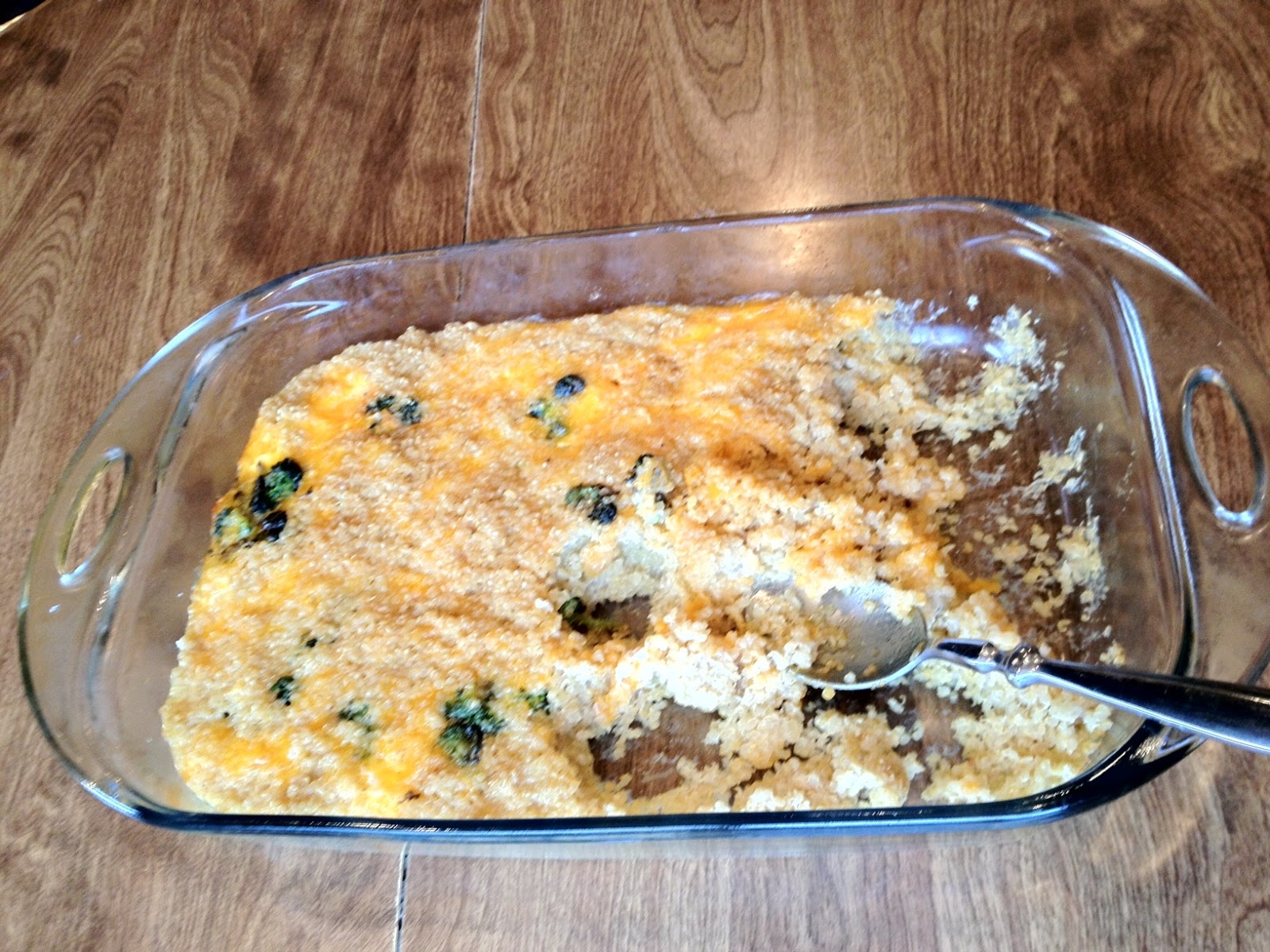
Third*: invent some random rice-y like grain substance and call it something silly like Quinoa (apparently pronounced "kinwa"), then cook it till it's mushy, mix in some mayonnaise or something, then put it in a casserole pan with some boiled broccoli peppered throughout. Add some cheese to make him think it's food, and cook it in the oven until the cheese is melted and the edges turn brown . . . or browner, I guess, since the boiled "bird seed" (a.k.a. quinoa) is brown to begin with.
Fourth: serve the Quinoa casserole next to a big salad. . .
Voilla!!! Husband politely eating plenty of salad for dinner, with little comment on the "simulated" main dish.
* Note: this plan may not work if your husband is a big fan of rice, or rice-y grains, mushy stuff, broccoli, and/or casseroles.
. . .thanks for all your wonderful efforts, baby! I love you AND almost ALL your dinners! :)
I will be serving as a Utah state delegate for our GOP convention April 21st. I'm interested in GOP preferences for the candidates we'll be electing. For my own use, I hope anyone interested in Utah GOP candidates will take a moment to fill out the following survey.
An interesting thing happened to me today. I believe I got a sense of genuine inspiration and direction for something I should specifically focus on in my life. This specific type of inspiration is truly quite rare in my life. It was one of those moments where the universe conspired--as it were--to deliver a message to me by design to point my life in a certain direction.
Here's what happened: Today, my wife texted me from a conference she's attending to tell me about a cool speech on TED.com about achieving effectiveness in leadership. I don't always take the time to review such recommendations, but I did this time--almost immediately after she recommended it. So, there I was watching this speech on leadership by Simon Sinek. If you haven't seen it, I highly recommend it:
Throughout the speech, Sinek encourages the audience to approach leadership from an inside-out perspective--namely, to let the core of what you believe and who you are dictate the means and results of your leadership. As an illustration of this point, Sinek refers to Martin Luther King as one who was often found saying, "I believe". Sinek's exact statement about King was this: "He didn't go around telling people what needed to change in America. He went around and told people what he believed. 'I believe. I believe. I believe,' he told people."
At the precise moment Sinek completed the above quote, the speech was automatically paused by an alert message I had set in my calendar to remind me to read a daily affirmation I have created. Interestingly, the affirmation starts with the statement: I believe in my ideas. . . The words "I believe. . ." were displayed on my screen over the paused speech at exactly the moment the speaker had repeated those words multiple times.
To HEAR the words "I believe. . ." repeated by Sinek at a moment where I had turned to think carefully about what my MLK-like mission might be, then to read the words "I believe. . ." on my daily affirmation at exactly the same moment was truly remarkable.
In fact, I had an interest in determining exactly HOW remarkable a "coincidence" such as this might be. I therefore endeavored to calculate the odds of such an occurrence. I found that my chances of randomly playing that speech within the course of any given year at such a moment as to coincide precisely with the alert for my daily affirmation (which was set for exactly 10:00am today) were 1 in 31,536,000. These are the odds as factored for only the timing of the speech and the alert aligning so precisely within the course of any given year. This is only ONE of several other variables. My alert being set for a different moment in the day, an opening other than 'I believe' on my affirmation, my wife's attendance at the conference, her choice to text me the speech, my choice to listen to it, etc. etc. Each of these variables have their own set of odds of occurring. Conservatively, the chances of all 6 variables aligning (and I'm certain 6 is NOT inclusive of all affecting factors) to produce the effect I experienced in that specific moment today are more than 23 trillion, 623 billion to 1.
What I am saying is this: I don't believe in coincidences; I believe in inspiration. I believe I received direction today on the most important things for me to consider at this moment in my life. I believe as the author, Paulo Coelho, articulated in one my favorite books, The Alchemist, "When you want something, all the universe conspires in helping you to achieve it." Today I wanted clarity of vision towards my purposes, and "the universe" reached out and handed it to me.
I recently came across this Sanskrit Proverb and found it powerful:
Look to this day
For yesterday is but a dream,
And tomorrow is only a vision,
But today, well lived,
Makes every yesterday a dream of happiness
And every tomorrow a vision of hope.
Look well, therefore, to this day.
-Sanskrit Proverb
Why are we so often tempted to reflect on our past as we consider the needs of now? I believe it is because we suppose our past performance is a good indicator of what our current ability might have the capacity to produce. And certainly that's a logical conclusion. However, when we get "stuck" in the past, it actually limits our current performance.
Let me give you an example. In 10th grade, I took weight training as an elective P.E. class (How sad is it that this was the only official goal-setting weight training class I have ever taken.) At the first of the class we maxed out our bench, overhead press, and a few other lifts. I remember being pleased enough with my performance--it being comparable to some of the "sportier" folks in the class. Throughout the class, I learned better techniques, had plenty of practice, and set goals for achieving better results. Near the end of the class, however, I found I was just short of reaching a fairly significant bench press goal I had set. I worked and worked, but no matter how hard I tried, I couldn't hit my target max weight.
After a lot of effort a friend of mine named Jack, from the varsity football team, spent some time getting into my head. He asked what I thought a good max for someone of my stature should be. I then told him how I had set my target weight because the P.E. coach had told me it was about the highest weight someone my size should shoot for--and that achieving it would be above an average result. Jack then told me that was the problem. "You can't worry about what someone says is possible for you. You have to focus on what it takes to do what you need to do right now. As you do, you'll improve. Be pleased with your ability, and keep working and you'll do everything you ever hope to do."
I took Jack's advice and went back to work, abandoning the false limits I had been dwelling on and instead focusing on the exercises I knew would help build my strength. By the end of the week, I easily hit the max that had been impossible for me for several weeks prior. By the end of the following week, I had well exceeded my highest expectations for progress.
Certainly a goal and direction were important, but the focus had to be on the daily work necessary to build what I needed to achieve my goals. The initial "place marker" was necessary to see my progress, but my mistake was dwelling on it.
Unfortunately, I have been guilty of repeating my high school weight training mistake from time to time. I sometimes worry about what I have accomplished (or not accomplished) in the past and let it weigh me down in my current pursuits. Jack's classic advice (and the above proverb) have often helped me focus my attention on the important things: focus on the accomplishing the current needs, and the past and future will take care of themselves.
(After my not so nice things to say about HP Support, I thought I'd quickly give a much more positive thought, so my complaining doesn't show up at the top of my blog for long.)
Easter was fun! We took the kids to the city rec. complex where they had 4 baseball diamonds full of "hidden" Easter eggs for the kids to go and "find". (I used quotes since the eggs seemed to be tossed loosely out in the grass of the outfield--even so, it was a fun event for the kids.) The goal was for each kid to find an egg with a number on it. If you get a numbered egg, you were entitled to redeem it for an Easter basket full of goodies. Preparation (despite the "hiding" job) had to have taken hours of several people's time. All the eggs that didn't have numbers were neatly stuffed with candy. The gathering of the eggs took SECONDS!
The amazing part of the event was that from community business donations and the serviceable effort of the local chapter of the Lions Club, there were over 600 Easter baskets available for the children. The Lions Club passed them out individually to each kid that brought up a numbered egg. They also limited baskets to one per kid--so those who collected multiple numbered eggs passed them along to those who were not so fortunate.
My son and daughter--although they each collected multiple eggs--didn't receive a numbered egg.
But after waiting in the "losers line" for what seemed like an eternity (probably 7 minutes or so;) they finally received one of the numbered eggs that had been passed along, and got a basket.
All's well that ends well.
The neat part to me (in addition to the heart warming appreciation I had for this little community [total population maybe 3,000] who so generously donated SIX HUNDRED Easter Baskets full of REALLY good candy--like 4.5oz solid Dove chocolate bunnies and boutique quality chocolate covered mint candies, etc--as well as the time necessary to execute the event, a professional D.J. who acted as M.C.--also time/equipment donated, etc. etc. etc.) . . . In addition to all that, the really cool thing to me was that, on our way to our car, FIVE different people checked with our family to make sure EACH of our children had received a basket--and offered to give them the one THEY had received if we hadn't. These people weren't part of the volunteers working at the event; they weren't friends or even people we knew. They were just concerned neighbors at a community event who wanted to make sure my children had a positive experience.
It's funny how meaningful that whole experience was for me. I don't think I appreciate often enough the things people do on my behalf.
It's also fun to give. We've been dealing with flooding in our neighborhood.
I got a call the other night asking if I would be willing to go help fill and place sandbags in order to try and save some homes. I started out in the fairgrounds filling bags. After filling only 20 or 30 bags, the operation director indicated that there were new breaches in the river banks by the homes behind the Field Street church and he needed a few volunteers to go there to help save the homes. I went with 4 of my close neighbors (and several more that I didn't know) to see what we could do. Upon arriving, I met up with Dan Dixon--a man who has been a bit of a mentor and role model of mine for some years--working in the sloppy mess of the flooding river. Despite the urgency of the moment, he smiled warmly to greet me. Since he had moved out of my immediate neighborhood some time ago, it had been a while since I had seen him and he asked about my family, work, and life in general as we worked to build sand bag walls to plug the breach.
After several hours of working, I went home very wet, very dirty, and very cold. But I went home happy and grateful for 1. the opportunity to help, 2. the success we had (the home didn't flood that night), 3. a community where people care about their neighbors--even when they don't know them personally. I was truly moved by the literally hundreds of "Dan Dixons" I got to work with that night who were willing to work hard to preserve the interests of community members. (OK, so the "hundreds" is literal; the "Dan Dixons" is metaphorical--they weren't literally all Dan Dixon. As cool as he is, that would be a little Twilight-Zone-esque.)
Certainly saving homes is more important than helping my kids pass the "boring parts" of church a little more easily. Yet, I was touched almost as deeply as my observation of the flood volunteers when a kind older gentleman sitting on the pew behind us overheard a conversation I had with my 4-year-old son. "Dad, can I have a pen?" he asked, while holding the little scratch pad he had worked hard to find in his mother's bag. "I'm sorry, I gave my pen to Britt, (his 7-year-old sister)" I told him--sorry that I couldn't oblige. As the boy looked down disappointed, I felt a tap on my shoulder as the older man behind us pushed a pen into my hand saying, "I've been there before" with a smile on his face. My son was saved from the remaining 35 minutes he would have had to bear of brother Mulman's sermon. ;) What a simple thing. What a simple, small little thing this man offered. Yet, he offered it. He saw a need and he helped!
One final "simple gesture" I observed this week was a letter my wife received from a woman we know from church. She's one generation ahead of us, and while we see her at church and appreciate her sweet nature, we don't really have any particular ties to her--except that she has a son who, 20 years ago, needed the same surgery our 11-month-old daughter will be having on May 5th to repair the hole in her heart that is creating her congestive heart failure. This kind woman took the time to write a 4-page hand-written letter with some thoughts of comfort for our family. She's not family. She doesn't have any specific 'church assignment' to look after us. We don't really even talk much. Yet, she took the time to reach out to us. . . to put her proverbial arms around our family to say, "I know what you're going through, and I care!" What a simple, simple little gesture it was--yet, how meaningful to my wife and me! Even now, I can't think of this kindness without tears of gratitude streaming down my face.
Here's my wife's account: http://honesters.blogspot.com/2011/04/letter-from-friend.html
It's simple thoughtfulness like this--the donation of time and resources to entertain children, neighbors working urgently to save the property of other members of the community as if it were their own, sharing knowledge, wisdom, and experience that will lighten the burden of someone in need. . . It is really the simple gestures that build men and women. . . that make others sincerely want to give more, be more, and DO more good with their lives! At least that's what it has done for me.
I bought one of the cool HP Mini Netbooks when they were brand new (I think it was early 2009). I loved it. Unfortunately, mine was one of the early models w/ an underpowered power supply for the bulky (and slow) hard drive they put in it. The hard drive crashed about 13 days after the 90-day store warrantee expired; so I was left to deal with HP's support line. After a long time (not kidding 3 or 4 hours), they determined they had to see my computer to see if they could fix it. So I shipped it to them and waited. . . .and waited and waited and waited.
After 3 weeks of waiting I called. The exact hard drive my computer originally had in it was back ordered, so they were waiting for it. I waited another couple weeks, and called again. Still back ordered. I put 2 and 2 together (duh), and realized the thing was back ordered cuz HP had discontinued using it--probably because it was faulty for everyone who had it. . .
Anyway . . . Very long story (a little) shorter, I spent more than 6 hours on the phone w/ HP support (NOT an exageration), and didn't get anything resolved. After a few days of calling HP and yelling at various supervisors (about how I had bought the stinking computer and had been able to use it for a couple months, and now I didn't have the thing for what was then going on two months. . . yadda yadda), they finally said--why don't we send you a replacement computer.
So they did. The new computer had a new/better hard drive in it, and everything seemed to be resolved. Thanks HP (despite how long it takes to talk to you about support issues--which is the real complaint here).
Well, some time later I overloaded the software capacity (of the my replacement HP Mini), downloaded a virus, and found it necessary to restore the factory settings of the computer. (Note to self: NEXT TIME YOU BUY A NETBOOK, USE THE RECOVERY PARTITION IT COMES INSTALLED WITH--despite the fact that you didn't realize it was there--AND CREATE A RECOVERY CD BEFORE DOING ANYTHING ELSE.) Unfortunately, by the time I got to the 'restore factor settings' step of my trouble shooting the virus problem, the recovery partition was already corrupted, and I had to use an external recovery process. I wiped the hard drive, and used the recovery CD from my original HP Mini netbook (that I had returned), and restored the operating system.
(man, I'm not making my "long story short" a very short story, am I. Sorry. ;)
The problem is the recovery CD for the original HP Mini netbook didn't completely match up with the chip set and components of my replacement netbook. So now--since the system re-install--I'm missing some drivers and key features from my computer. (For example, my system restore feature doesn't work, my system standby mode doesn't work, I can't get the right driver [no matter how many I try from HP.com] for my ethernet port, etc.) I've been limping along without these features for some time, but I finally got sick of it today and decided I would call HP to order the ACTUAL recovery CD for this netbook.
Pretty simple conversation, right: "Hi. I'm Blaine. I have a HP Mini NetBook and I want to order the system recovery CD for the exact serial number/product number computer that I have." WRONG!
"Tell me again why you can't get the right drivers. Why can't you download them from our website? Why didn't you use the recovery partition? How many times have you tried restoring it? etc. etc. etc."
LOTS of questions and talking to another supervisor (after LOTS of hold time) and repeating the LOTS of questions later . . . (literally about an HOUR after I started the call) I'm finally told "I'd be happy to send you the recover CD. That will be $15.93 for GROUND shipping." Really? $15.93 for SHIPPING. . . A CD?!?!?!?
I started into a line of questioning that would have wound up with something like: Do you KNOW how much shipping CD's costs for EVERYONE ELSE IN THE WORLD? (For those who don't know, it's about $0.42. 42¢!!!) But I refrained--and politely paid the scammer that is HP Support. (I was at his mercy on getting what I needed. Good for HP for taking advantage of their stadium pricing ability in such cases as mine.)
But the price for shipping a recovery CD is not the issue. (Although, I would have much appreciated if they would have told me that I was actually buying a CD for my $15.93--not ground shipping.) The rant is that I knew exactly what I wanted from them, I succinctly articulated the need, and I still couldn't get off the line with HP Support in any less than AN HOUR! I'm annoyed AGAIN by HP Support.
Sorry to "drag you down to my personal hell" as my brother sometimes puts it when I complain. My advice to anyone wondering about HP Mini Netbooks: Get an I-Pad!
One evening an old Cherokee told his grandson about a battle that goes on inside all people. He said, “My son, the battle is between two 'wolves' inside us all.
“One is Evil. It is anger, envy, jealousy, sorrow, regret, greed, arrogance, self-pity, guilt, resentment, inferiority, lies, false pride, superiority, and ego.”
“The other is Good. It is joy, peace, love, hope, serenity, humility, kindness, benevolence, empathy, generosity, truth, compassion and faith.”
The grandson thought about it for a minute and then asked his grandfather, “Which wolf wins?”
The old Cherokee simply replied, “The one you feed.”
I was thinking today about the poetic term "sound of silence" as made famous in Simon and Garfunkel's hit single by that name. The theme articulated in the lyrics of that song gives some insight on part of how I personally feel about silence; namely, that silence is often the enemy to what ought to be said--yet it's a powerful friend in moments where a stark contrast to the glaring metaphorical noise of the world is critically needed. (. . .. as per my own interpretation of the song, of course.) So, yes. . . I enjoy silence.
The quiet moments wherein the soul has room to ponder the deeper things of life can be beautiful and life changing. And it's my opinion that music, TV, and other "noise" detract from that space a little too often (in my own life, at least). Some of the best advice I ever heard came from an 84-year-old man who answered a question about how he had maintained happiness and health throughout his long life. His answer was that he took at least 15 minutes every day to simply sit in a quiet place and think. Not read, write, listen to music, fall asleep, or anything else. . . just sit in silence, and think.
Life becomes so much more real when we can take a moment and disconnect. I think silence is a key to doing that effectively. I really should plan and make room for such moments in my life a little more often.
One of the most profound things I've read in a while came from my sister-in-law who took a moment to summarize a few of the life lessons she has been privileged to gain recently. She said:
"Life moves on whether we decide to be present or not. Be present! Be content with what you have, and live!"
How much time do we waste lamenting past decisions or dreaming of future achievements. Life is here and now; and unless we are a part of it here and now, it passes us by leaving us with nothing more than more regret of what we missed while we weren't "there" for life as it came.
Thanks for the wisdom, Heather. You're truly an inspiration to me!







 Posts
Posts


